Topsoil calculator for Vermont
Figure cubic yards for lawns, beds, and final grading, with depth guidance for planning the order.
Enter your project dimensions
Choose your depth before calculating. It affects a topsoil order more than square footage. A 1,000-square-foot lawn takes 12 cubic yards at 4 inches, but a half-inch topdressing uses only 1.5 yards. Start by defining the job. This calculator turns your area and selected depth into cubic yards, the measure used to sell topsoil, and tons at roughly 2,200 lb per dry yard. Screening removes rocks, roots, and clumps from topsoil, reducing the raking needed afterward.
Pick depth, then calculate
- Lawn topdressing: 1/4 to 1/2 inch. Rake it in while leaving grass tips exposed.
- Prepare for overseeding: 1/2 to 1 inch.
- For a seeded or sodded lawn, place 4-6 inches over a loosened subgrade.
- Flower beds: work 6 inches into the native soil underneath.
- Raised vegetable beds: use 12 inches. A garden-soil blend is better suited to beds (see the Soil Calculator).
- Measure your area in feet, then select a depth from the options above.
- Cubic feet ÷ 27 = cubic yards, and yards × 1.1 = tons. This calculator handles both calculations and includes 5% when the allowance is left on.
Tons = cubic yards × 1.1
Coverage guide
| Depth | 1 cubic yard covers | 5 yards cover |
|---|---|---|
| 1/2 inch topdress | 648 sq ft | 3,240 sq ft |
| 2 inches | 162 sq ft | 810 sq ft |
| 4 inches | 81 sq ft | 405 sq ft |
| 6 inches | 54 sq ft | 270 sq ft |
| Project | Typical size | Depth | Volume | Weight |
|---|---|---|---|---|
| New lawn, seed or sod | 1,000 sq ft | 4" | 12.3 yd³ | 13.6 tons |
| Lawn topdressing | 2,000 sq ft | 0.5" | 3.1 yd³ | 3.4 tons |
| New flower bed | 15 x 4 ft | 6" | 1.1 yd³ | 1.2 tons |
| Patch repairs around the yard | ≈ 150 sq ft | 2" | 0.9 yd³ | 1 tons |
| Finish grade over fill | 600 sq ft | 4" | 7.4 yd³ | 8.1 tons |
Example calculation: 1,000 square feet of new lawn
For 4 inches: 1,000 x 0.333 = 333 cubic feet = 12.3 cubic yards, or about 13.5 tons loaded. For this size, orders commonly run 12.5 to 13 yards, with the remainder used along edges and in low spots. If the subgrade needs added height, build it first with fill dirt. Reserve topsoil for the upper 4 inches where roots grow.
Screened topsoil and how to assess a load
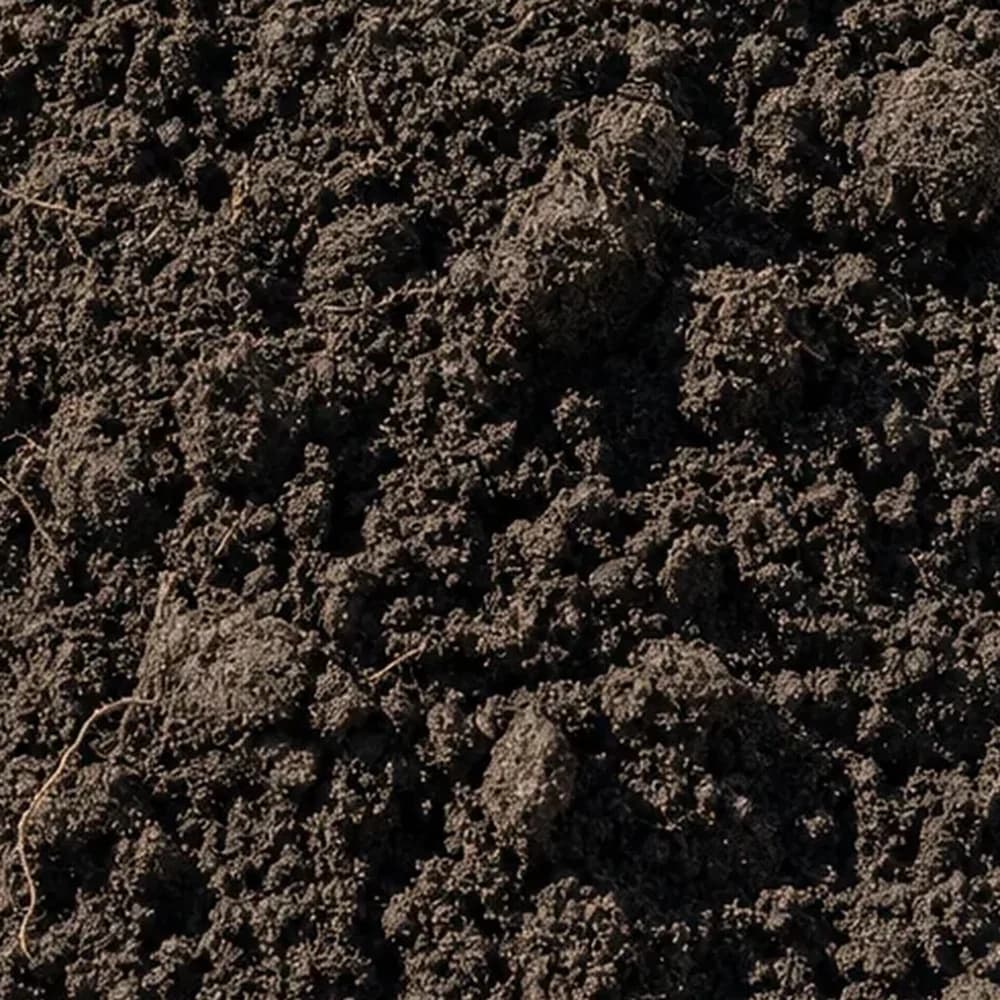
Topsoil is nature's upper soil layer and contains organic matter. During screening, mesh separates out stones, roots, and clods. Screened topsoil should be dark, friable in your hand, and smell like forest ground instead of a swamp. Press a moist handful together. It should form a loose ball, then break up with a poke. A smooth ribbon points to heavy clay, while soil that will not form a ball is mostly sand. Gray color or a sour odor can indicate wet, airless storage. Visible rhizomes can bring in weeds. Take photos of anything unusual before spreading and call us.
Spread it the right way
- Before spreading, loosen the subgrade by an inch. Four inches of topsoil placed over sealed clay drains like a bathtub with its plug in.
- Slope the grade away from the house: allow a 6-inch drop across the first 10 feet.
- Settle it firmly without stomping. In settled topsoil, a footprint should sink about half an inch.
- Arrange delivery during the week you plan to spread. After rain, a pile can weigh a third more with each shovel and will smear rather than rake.
Understanding topsoil orders
What topsoil depth does a new lawn need?
What does a yard of topsoil weigh?
What is the cost of a yard of topsoil?
What area will a yard of topsoil cover?
What does topsoil mean?
Can topsoil go over existing grass?
For beds, topsoil or garden soil?
Should I till before applying topsoil?
More calculators
Finished the lawn calculation? We deliver the soil.
Screened topsoil sold by the cubic yard, with free delivery across Vermont.